
PREHOSPITAL BLOOD PROGRAM GUIDANCE
BRINGING THE ER TO THE PATIENT
A resource for agencies initiating a prehospital whole blood program based on established best practice guidelines.

Prehospital blood transfusion programs are effectively changing the healthcare landscape in emergency medical settings by significantly increasing patient’s chances of survival suffering from traumatic injury. Trauma patient outcomes drastically improve when whole blood is administered; blood volume is quickly restored, and vital clotting function is enhanced. In simple terms, whole blood is essentially the blood that runs through a person’s veins, which is made up of red cells, white cells, platelets, and plasma. Low Titer Type O Whole Blood (LTOWB), specifically, is the resuscitation product of choice to treat hemorrhagic shock, as it is considered the universal donor representing minimal risk of clinical consequences.
Traumatic injury remains the leading cause of death for individuals under the age of 46, with many patients bleeding to death before they reach a hospital. By equipping EMS units with prehospital whole blood, experts estimate that 40,000 to 60,000 lives would be saved annually. Military medicine has demonstrated that using blood products early, either near the point of injury or during transport to a medical facility, significantly decreases mortality and improves survivability. Carrying whole blood not only saves lives but can reduce the need for additional transfusions once the patient arrives at the hospital. Immediate blood transfusions are also proven to be life-saving in cases of severe bleeding caused by childbirth, surgery complications, or disease.
In collaboration with Chris Briggs of Parker County Hospital District EMS
KEY COMPONENTS OF A PREHOSPITAL WHOLE BLOOD PROGRAM
are identified for successful implementation, operation, and maintenance.


Upon starting a prehospital whole blood program within your agency, the first steps should be to gather supporting data by conducting research and understanding the regulatory guidelines. It is important to identify how often you anticipate the need to use blood in the field, in addition to understanding the average transport time to the closest trauma centers and hospitals with blood.
Prehospital blood programs require buy-in from appropriate stakeholders, such as the blood banks and medical director. These key stakeholders ultimately determine whether your organization will be permitted to move forward with a blood program. They will have many questions and concerns regarding your agency carrying blood, but by providing them with the data you’ve collected, you’re one step closer to starting a program and ultimately saving lives and improving patient outcomes. Building rapport and establishing a strong partnership with your blood bank is essential for the success of the program. Prehospital blood programs must be thoughtfully planned, have multiple safeguards and processes in place, and ensure proper training and education. All individuals involved must be responsible stewards of the blood.
Looking to colleagues and existing, established blood programs for guidance are key when implementing your own prehospital whole blood program. It’s important to bear in mind that not all program models are exactly alike and differ based on varying agency factors such as capability, funding, support, guidelines, and strong blood bank partnerships. What may work for one agency may not necessarily work for another, so ensuring you do your due diligence and understanding the resources available to you are paramount. Some examples of EMS agencies who have established successful whole blood programs are at the bottom of this page.
Additional guidance from accredited bodies such as the Food and Drug Administration (FDA) and the Association for the Advancement of Blood & Biotherapies (AABB) provide standards and regulations for the proper handling, storing and transfusing of blood products. AABB is a leader in setting the standards for blood banks and transfusion services, ensuring the highest level of safety for patients. These entities are extremely resourceful in providing support and the necessary regulatory guidelines to assist in implementing your prehospital whole blood program. Understanding and adhering to protocols, proper transport and storage, and safety regulations for blood products are critical for whole blood programs.
Proper blood handling is vital for both safety and regulatory compliance. Blood must be stored between 1-6°C, with whole blood having a shelf life of 21 to 35 days depending on the product. However, it is the blood bank that sets the timeframe that agencies are allowed to keep blood for before rotating any unused units back to the trauma center. Continuous temperature monitoring is required, with data logged every four hours to ensure conditions are maintained. It’s also important to closely monitor expiration dates and rotate stock to ensure older supplies are used first. Blood banks require that all temperature records be retained for at least 10 years to meet audit requirements.
Staff training plays a key role in maintaining compliance. Training should focus on daily inspections, such as verifying that storage temperatures are within the correct range, ensuring that continuous monitoring systems are functioning properly, and logging temperature data accurately. Staff must also be prepared to recognize and address any temperature deviations, as even minor fluctuations can impact the safety of blood products. A well-trained team ensures proper blood management and helps your agency uphold the highest standards of patient care.
To create a successful prehospital blood program, EMS agencies must navigate several challenges, including limited resources, financial constraints, and skepticism from blood banks and hospitals. One major issue is the limited trust from blood banks, as they may doubt whether EMS agencies can safely store and transport blood under the required conditions. Building this trust involves demonstrating stringent safety protocols, such as reliable equipment to maintain the necessary 1-6°C temperature, along with proper monitoring and timely reporting of temperature data. Hospitals may also resist EMS agencies carrying blood due to concerns about waste and associated costs. Establishing a system to rotate near-expiration blood back to trauma centers for hospital use is critical to avoid waste. However, determining who pays for the cost of expired blood—whether the EMS agency, hospital, or blood bank—is a key challenge that must be addressed.
Financial challenges are significant, as the cost of each transfusion averages around $750, not including warmers and storage devices, which add to the overall expense. Currently, insurance agencies, Medicare, and Medicaid do not yet cover these costs, leaving EMS agencies to absorb the financial burden. Initial program setup requires an investment ranging from $7,500 to $15,000, and ongoing costs must be covered through tax dollars, grants, donations, or support from foundations. Budgets vary widely across EMS agencies, and the diversity of funding sources makes deployment even more complex. Each EMS system operates differently, with different funding mechanisms, making it crucial to explore multiple avenues for financial support to sustain a whole blood program (WBP) while ensuring blood is delivered safely to patients in need.
After overcoming any initial barriers, recommended best practice guidelines for continued success and to serve as the foundation for the whole blood program are outlined below:
Regulatory Compliance
- Follow Regulations: Adhere to guidelines set by local and national organizations such as the American Red Cross, the FDA (U.S. Food and Drug Administration), and AABB (Association for the Advancement of Blood & Biotherapies).
- Quality Assurance: Implement rigorous quality control procedures to ensure the safety and efficacy of whole blood.
- Decision Maker: Identify a primary decision maker at management level (as well as a backup) who is actively involved in the organization’s blood program from the beginning.
- Staff Training: Provide comprehensive training for all personnel involved in the prehospital blood program, including paramedics, EMTs, and medical directors. This should cover blood handling, administration protocols, recognizing transfusion reactions, and patient monitoring.
- Maintenance: Update your staff regularly and keep training current with the latest practices and protocols in blood management and transfusion medicine.
- Proper Storage: Maintain appropriate storage conditions with temperature control to ensure blood remains viable.
- Medical blood storage devices should be FDA Listed and feature a remote blood monitoring & tracking solution to ensure accountability and traceability.
- Storage devices should be AABB Certified and align with the AABB Standards for Blood Banks and Transfusion Services.
- Additional Equipment: Provide further resuscitation care with safe and reliable blood warming devices and rapid blood delivery infusers.
- Indications for Use: Define clear criteria for when whole blood transfusions should be administered, based on clinical guidelines and patient needs.
- Understanding Logistics: Communicate the importance of program logistics to include how to purchase, how and when to procure blood and how to rotate it back to the trauma center if unused.
- Guidelines: Develop standard procedures for the transfusion of whole blood, to include the use of blood warmers if necessary to prevent hypothermia.
- Accountability: Educate one’s team on what NOT to do and how improper actions could have a potential adverse outcome.
- Monitoring: Implement protocols for monitoring patients during and after transfusions for any adverse reactions.
- Record Documentation: Maintain detailed and accurate records of blood transfusions to include administration times and patient responses.
- Incident Reporting: Establish a system for reporting and investigating any adverse events or complications related to blood transfusions.
- Coordinated Efforts: Collaboration with the blood bank, hospitals, and other emergency services will ensure seamless integration of your whole blood program.
- Effective Communication: Establish strong communication channels for requesting and receiving whole blood in prehospital settings.
- Evaluate and Evolve: Assess your whole blood program on a regular basis, making improvements where warranted based on feedback, new research, and evolving best practices.
- Benchmarking: Continue to measure your program’s best practice guidelines against other successful organizations to ensure the highest standards.
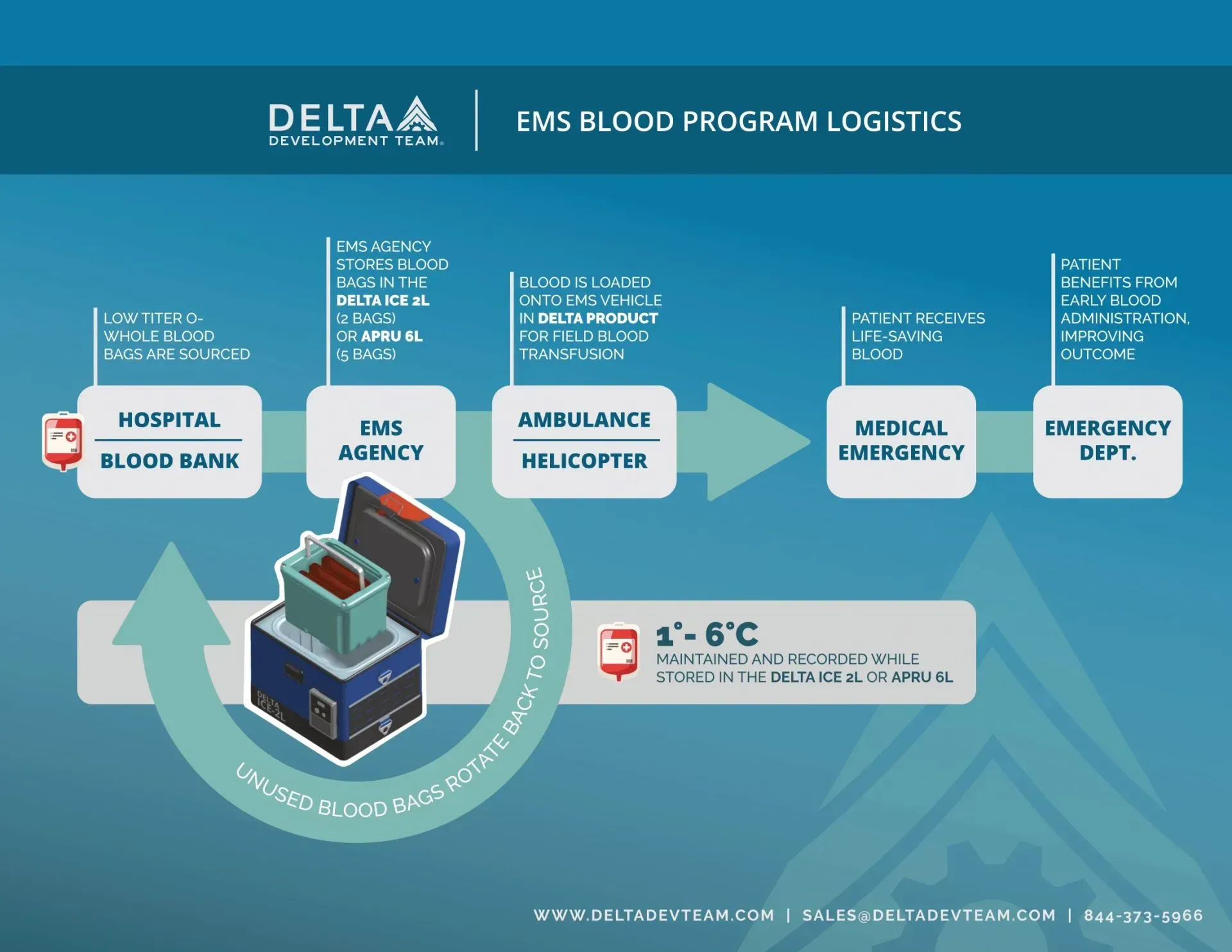
Managing unused whole blood requires careful coordination to avoid wasting and to ensure it remains viable for future use prior to its expiration date. This includes detailed record-keeping, effective communication, and regulated storage and transport. The agency’s detailed reports should identify the blood inventory’s usage and when its expiration date is nearing to ensure it is rotated back to the trauma centers in a timely manner where it can be spun down into its components and utilized in other ways. It’s imperative for EMS agencies to have a close working relationship with their trauma centers and blood banks for a streamlined process and to reallocate any unused blood accordingly. Unused blood must also be carefully stored and transported under regulated conditions and accompanied by proper documentation for accountability purposes when rotating it back to the hospital or trauma center.
- Temperature Control: Maintaining proper temperature during transport is critical. Specialized blood transport containers are used to keep the blood at the correct temperature.
- Proper Documentation: Accurate records of the blood to include its original collection date, expiration date, and transport details are maintained.
- Compliance: Adherence to regulatory guidelines and quality assurance protocols is necessary to ensure blood is handled properly and remains safe and effective for use.

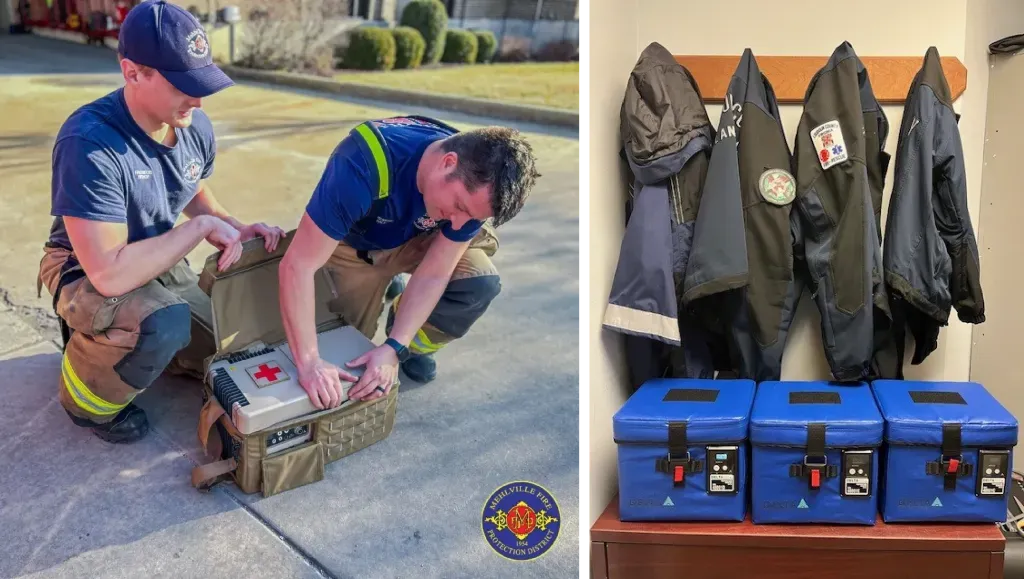

Saving Lives | EMS Whole Blood Program Successes
Loading...
Read more success stories